
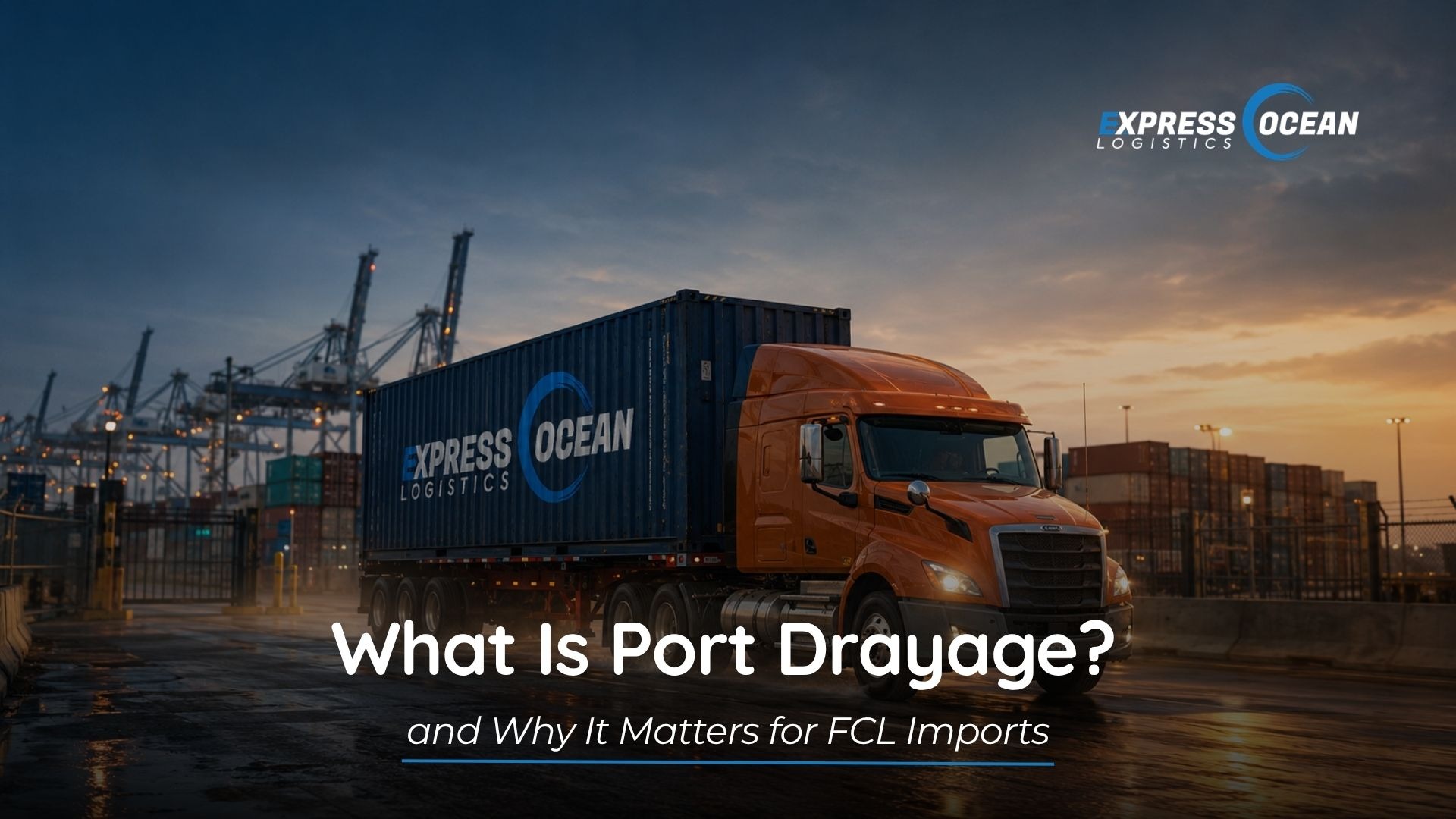
Port drayage is the short-distance trucking of a container between a port terminal and a nearby facility such as a warehouse or rail ramp. For an FCL import, it is how the full container gets from the terminal where the vessel discharged it to your door. Drayage matters because its timing controls whether you incur demurrage and detention, so a container collected within the terminal free time and returned promptly avoids the charges that catch unprepared importers.
Most guides to importing focus on the ocean voyage, the part of the journey that covers thousands of miles. But the move that most often decides whether an import runs smoothly or racks up charges is the shortest one, the few miles from the port terminal to your warehouse. That move is called drayage, and it is where the ocean leg becomes an inland delivery.
This guide explains what port drayage is, how it fits into the FCL import journey, the main types of drayage, why it sits at the center of demurrage and detention charges, and what causes drayage to go wrong. Understanding it turns a stage most importers ignore into one they can control. It is written from over 20 years of moving containers off the docks at the Port of New York and New Jersey at Express Ocean Logistics.
What Is Port Drayage?
Port drayage is the transport of a shipping container over a short distance, typically between a port terminal and a nearby destination such as a warehouse, distribution center, or rail ramp. It is the ground move that connects the ocean leg of a shipment to the inland leg. The term comes from the dray, a low cart once used to haul heavy loads over short distances, and the trade kept the name even as the carts became trucks.
For an imported full container, drayage is the specific move that takes the container from the marine terminal, where the vessel discharged it, to the importer's facility. It sounds simple, but it sits at the intersection of the terminal's rules, the availability of a chassis, customs clearance, and a tight free time window, which is why it deserves far more attention than its short distance suggests. A container arriving as part of standard FCL ocean freight still has to clear this final hurdle before the goods are actually in your hands.
Where Drayage Fits in the FCL Import Journey
Drayage is easy to overlook because it is not one of the long, visible legs of a shipment. But it is the connector that everything else depends on, sitting right at the point where the container leaves the port and enters the domestic supply chain.
The sequence matters. The container cannot be drayed out until it has been discharged and released by customs, and it should not sit at the terminal once it is available, because that is when charges begin. This tight dependency is why drayage is so often the stage where an otherwise smooth import runs into trouble. A container that clears customs on time but is not collected quickly still ends up costing the importer, which is the same failure mode that drives most customs delays into extra charges. Drayage is where good planning either pays off or unravels.
The Main Types of Drayage
Drayage is not a single service. The industry recognizes several types depending on where the container is going and how it moves. These are the ones that matter most to importers.
Moving the container directly from the port terminal to the importer's facility or warehouse. This is the most common type for FCL imports going straight to a single destination.
Moving the container from the port to a rail ramp, where it continues inland by rail. Common when the final destination is far from the arrival port and rail is more efficient than long-haul trucking.
Relocating a container from a congested terminal to a nearby holding yard when the terminal is short on space. It buys time but adds a handling step.
A time-critical move prioritized to avoid demurrage or to meet an urgent delivery. Used when a container is close to running out of free time and must be pulled fast.
For most importers bringing in a full container to a single warehouse, door drayage is the move that matters, and intermodal drayage becomes relevant when the cargo needs to travel deep inland from the arrival port. A good provider chooses the right type for the routing rather than defaulting to whatever is easiest.
Why Drayage Matters: Demurrage and Detention
The real reason drayage deserves attention is money. The drayage leg is where two of the most common and most avoidable charges in importing are won or lost: demurrage and detention. They sound similar and are often confused, but they are distinct.
| Demurrage | Detention | |
|---|---|---|
| What triggers it | The container sits inside the terminal beyond its free time | The container or equipment is held outside the terminal beyond the allowed time |
| Where it happens | At the marine terminal | At the importer's facility or in transit |
| Charged by | The terminal or carrier | The carrier or equipment owner |
| How to avoid it | Collect the container within the terminal free time | Unload and return the empty within the allowed period |
Both clocks are running against you the moment the container becomes available. Demurrage starts if the container is not collected from the terminal within the free time the carrier allows. Detention starts once you have the container but hold the equipment too long before returning the empty. Drayage sits directly on both clocks, because the speed and coordination of the pickup and the return are exactly what keep the container inside the free windows. This is why a well-managed drayage operation is not a convenience but a cost control.
What Makes Drayage Go Wrong
When a drayage move slips, it is usually one of a small set of recurring bottlenecks. Knowing them in advance is how a good forwarder plans around them.
- Chassis shortages: A container needs a chassis to move by road, and at busy ports a chassis shortage can delay pickup even when the container is ready. Securing chassis capacity in advance is essential.
- Terminal appointments: Most major US terminals run appointment systems, and slots can book out. Missing an appointment window pushes the pickup back and eats into free time.
- Port congestion: When a port is congested, truck turn times lengthen and the number of moves a driver can complete in a day drops, slowing every pickup.
- Late customs release: A container cannot be drayed out until customs releases it, so any delay in clearance directly delays the drayage and compresses the free time remaining.
- Driver and capacity limits: Qualified port drivers with the right credentials are a finite resource, and during peaks the available capacity tightens across the region.
The common thread is that none of these can be fixed at the last minute. They have to be anticipated, which is why drayage is best handled by a party that coordinates it alongside the customs clearance and the container's availability rather than treating it as a separate booking made once the container has already landed. Knowing exactly when the container is discharged and cleared is half the battle, and reliable container tracking is what lets the drayage be scheduled for the moment the box is actually available.
How to Keep the Drayage Leg Running Smoothly
Importers who treat drayage as an afterthought pay for it in charges and delays. Those who plan it as an integrated part of the shipment rarely see a problem. The difference comes down to a few habits.
- Clear customs before the vessel arrives: Pre-filing the entry so the container is released on or near arrival preserves the maximum free time for the drayage.
- Line up the chassis and appointment early: Confirm chassis availability and book the terminal appointment as soon as the arrival is known, not after the container lands.
- Have the warehouse ready to receive: A container that arrives at a facility that cannot unload it promptly turns into detention, so align the delivery with the receiving schedule.
- Return the empty promptly: Detention runs until the empty container is back, so plan the return move as carefully as the pickup.
- Use one party for freight, customs, and drayage: When the same team controls all three, the handoffs disappear and the drayage is timed against real container status rather than guesswork.
This last point is the one that quietly makes the biggest difference. Drayage handled in isolation is always reacting to information it gets late. Drayage handled as the final leg of a coordinated move, the way it works within a full door-to-door ocean freight service, is planned against the container's actual position and clears the terminal inside the free time by design.
Drayage with Express Ocean Logistics
Express Ocean Logistics manages the drayage leg as part of the full import move rather than a separate booking. Because we handle the ocean freight and the customs clearance in-house, we know exactly when a container is discharged and released, and we schedule the pickup against that real status so it clears the terminal inside the free time.
Our base minutes from the Port of New York and New Jersey gives us the local network and the port access to move containers off the docks quickly across the Northeast, and our port drayage operation is built around the chassis capacity and terminal relationships that keep pickups on schedule when the port is under pressure. Importers work with us as a freight forwarder in New Jersey precisely because the final short leg, the one that decides whether the whole import stays clean of charges, is handled by the same team that managed the ocean and the customs.
Drayage is the shortest leg of an FCL import and one of the most consequential. Handled well, it is invisible. Handled badly, it is where the charges land. The goal is always to make it invisible.
Frequently Asked Questions About Port Drayage
These are the questions importers ask most often about port drayage and how it affects an FCL shipment.
What is port drayage?
Why is drayage important for FCL imports?
What is the difference between drayage and regular trucking?
What is a chassis in drayage?
How does drayage help avoid demurrage and detention?
Who arranges port drayage for an import container?
Need Drayage That Clears the Terminal on Time?
Express Ocean Logistics moves your container off the docks fast, with the ocean freight, customs, and drayage handled by one team out of the Port of New York and New Jersey. Tell us about your shipment.
Explore Our Inland Trucking Services