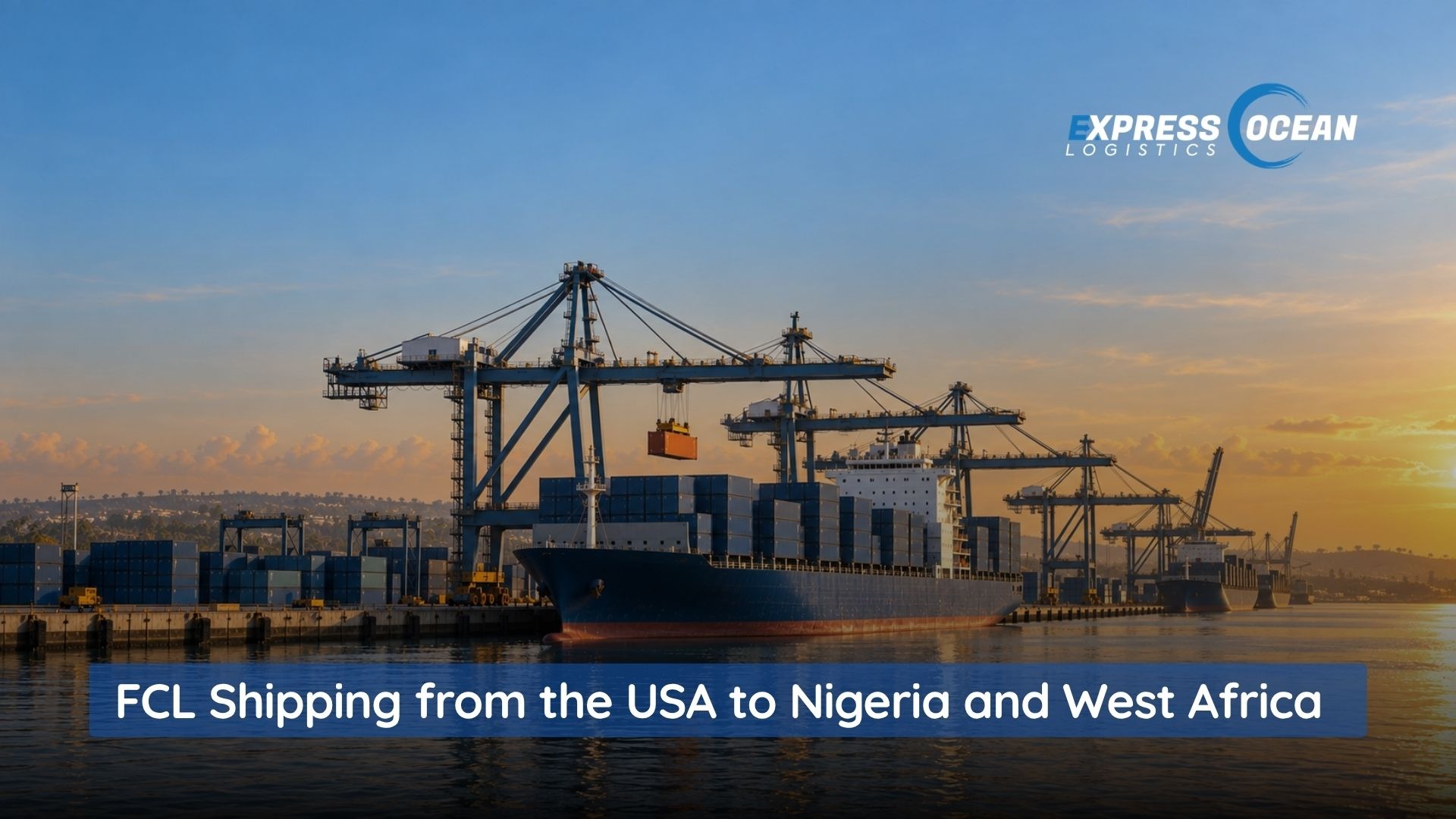
FCL shipping from the USA to Nigeria and West Africa moves a full container across the Atlantic to a West African port, usually via a transshipment hub in Europe or the Mediterranean. From the US East Coast to Lagos, transit is typically 20 to 30 days. The main gateways are the Lagos ports of Apapa and Tin Can Island, the newer Lekki Deep Sea Port, and Onne. Nigeria has strict import rules, so the shipment needs a valid Form M, a PAAR from Nigeria Customs, and, for regulated goods, SONCAP certification before it can clear.
West Africa is one of the most active trade corridors for US exporters, and Nigeria, the largest economy in Africa, sits at the center of it. Businesses and members of the diaspora ship everything from machinery and vehicles to building materials and general goods across the Atlantic every week. The ocean route itself is well established, but the West African lane has a reputation for being complicated, and most of that complication comes down to documentation and customs rather than the shipping.
This guide lays out the whole picture of exporting a full container from the USA to Nigeria and the wider West Africa region: realistic transit times, the main ports, the specific Nigerian import requirements that catch exporters out, and how to run the shipment cleanly. It is written from over 20 years of moving cargo across the Atlantic at Express Ocean Logistics.
Why FCL Works Best on the West Africa Lane
FCL, or Full Container Load, means you book an entire container exclusively for your cargo. On the USA to West Africa lane, FCL is the preferred mode for anything approaching a full container, because it gives lower handling risk on a long transit, simpler customs treatment since the whole container clears as one shipment, and better security for cargo that will pass through a transshipment hub on the way.
The fundamentals do not change from one destination to the next, and understanding what FCL ocean freight is gives you the base you need before layering on the West Africa specifics. What makes this lane distinct is not the container, it is the routing and the Nigerian import process, which is where the rest of this guide focuses.
USA to Nigeria and West Africa Transit Times
Transit to West Africa is longer than to Northern Europe, mainly because direct sailings are limited and most cargo is transshipped through a hub. The figures below are typical port to port ranges and do not include origin pickup, customs, or final delivery.
| US Origin | West Africa Destination | Route | Port-to-Port Transit |
|---|---|---|---|
| New York / New Jersey | Lagos (Apapa / Tin Can / Lekki) | Via European or Med hub | 20 to 30 days |
| Houston | Lagos | Via transshipment hub | 22 to 32 days |
| Savannah / Charleston | Lagos | Via transshipment hub | 22 to 30 days |
| New York / New Jersey | Tema (Ghana) | Via transshipment hub | 18 to 28 days |
| New York / New Jersey | Abidjan (Cote d'Ivoire) | Via transshipment hub | 20 to 30 days |
Transit varies with the hub and the connecting service, which is normal on lanes served by transshipment rather than direct sailings, in the same way that timing shifts by route and season on any major lane, such as ocean freight from China to the US. Because the journey is long and passes through a hub, staying informed on where the container is matters, and the ability to track a shipping container in real time lets you time the Nigerian clearance and delivery around an accurate arrival.
Major Ports in Nigeria and West Africa
Nigeria's ports handle the bulk of the region's US trade, with several regional gateways serving neighboring countries. The right port depends on the final destination and the onward network.
The traditional main gateways in Lagos and the busiest ports in Nigeria. They handle the majority of container trade but have historically faced congestion, so timing and planning matter.
Nigeria's newest and deepest port, able to handle larger vessels and helping to ease pressure on the older Lagos terminals, increasingly used for container cargo.
Near Port Harcourt in eastern Nigeria, serving the region and the oil and gas sector through its free zone, an option for cargo destined to the east.
Key gateways in Ghana, Cote d'Ivoire, Togo, and Senegal. Lome is also a major transshipment hub for the region, feeding smaller ports along the coast.
The Nigeria Import Process: Form M, PAAR, and SONCAP
This is the part of the lane that catches exporters out, and it is worth understanding even though the requirements sit on the importer's side. Nigeria has a structured, document-heavy import process, and cargo will not clear without the right paperwork in place before arrival.
Form M is a mandatory electronic declaration of intent to import, completed by the Nigerian importer through the Nigeria Single Window trade portal via their authorized dealer bank. It must be valid before the shipment arrives and underpins the rest of the clearance.
PAAR, the Pre-Arrival Assessment Report, is issued by the Nigeria Customs Service based on the Form M and supporting documents. It is used to assess duty and is a required part of clearing the goods.
SONCAP, the Standards Organisation of Nigeria Conformity Assessment Programme, applies to regulated products. For controlled goods, the importer obtains a Product Certificate and then a SONCAP Certificate confirming the goods meet Nigerian standards, without which regulated cargo will not clear. Not every product needs it, so confirm early whether your goods are on the regulated list.
Documentation for USA to Nigeria Shipments
The documentation combines the standard US export set with the Nigerian import requirements. Getting all of it aligned before arrival is what avoids expensive demurrage at a Lagos terminal.
- Commercial invoice: States the buyer, seller, goods, and value, and feeds both the Form M and the customs duty assessment.
- Packing list: Details the contents, weights, and dimensions, and must match the commercial invoice.
- Bill of Lading: The transport contract and title document, issued by the carrier or your NVOCC freight forwarder.
- Electronic Export Information via AES: Filed on the US side for shipments valued over 2,500 dollars per Schedule B code or requiring a license.
- Form M, PAAR, and SONCAP: The Nigerian import documents the consignee must hold, with SONCAP required for regulated goods.
- Certificate of origin: Commonly required, confirming where the goods were produced.
The FCL Export Process from the USA to West Africa
A full container export to West Africa follows a clear sequence, with a transshipment leg in the middle and a documentation-heavy clearance at the end.
Your freight forwarder books the container and the West Africa service, you load and seal it, and the Verified Gross Mass is submitted before the deadline so the container can be loaded onto the vessel.
Where required, the Electronic Export Information is filed through the Automated Export System, generating the Internal Transaction Number. Your forwarder typically files this as your authorized agent.
The vessel crosses to a hub in Europe, the Mediterranean, or West Africa, where the container transfers to a connecting service to the destination port. This leg is why the lane takes longer than a direct route.
At the destination port, the importer clears the cargo using the Form M, PAAR, and, where required, SONCAP, and pays duty and import charges. Complete paperwork here is what prevents the cargo sitting and accruing demurrage.
Once cleared, the container moves to the final destination, is unloaded, and the empty is returned to the carrier within the free time window to avoid detention charges.
The US export side is the same for any destination, and the full sequence of moving a container out of the country is the foundation of every lane. When you want the shipment handled all the way through rather than stopping at the destination port, door-to-door ocean freight extends that coordination to the final address, which is particularly valuable on a lane where the clearance step is demanding.
Choosing a Provider for the West Africa Lane
West Africa rewards experience more than almost any other lane, because the margin for documentation error is small and the cost of getting stuck at the port is high. The provider you choose should know the routing, the transshipment options, and the Nigerian clearance process well enough to guide your consignee, not just book the ocean leg.
Whether you think of the partner you need as a forwarder or an FCL export company, what matters on this lane is a valid FMC license, established West Africa services, and the customs knowledge to keep a shipment moving through a demanding clearance. On a corridor this document-sensitive, the right provider is the difference between a container that flows and one that sits.
Exporting to West Africa with Express Ocean Logistics
Express Ocean Logistics manages FCL exports from the USA to Nigeria and across West Africa as a coordinated service, from the booking and AES filing on the US side through the transshipment routing to arrival at the destination port. As an FMC-licensed freight forwarder and NVOCC, we hold the carrier relationships and routing options that keep space reliable on a lane where direct capacity is limited.
Our position close to the Port of New York and New Jersey gives our exporting clients fast origin handling and dependable connections onto the West Africa services. Businesses and diaspora shippers across the country rely on us as an international freight forwarder in the USA because we understand the Nigerian import process and coordinate the shipment so the documentation lines up with the cargo rather than trailing behind it.
Whether your container is bound for Lagos, Onne, or a regional port such as Tema or Abidjan, our FCL ocean freight service handles the routing, the carrier coordination, and the guidance your consignee needs to clear a demanding customs process, so a full container leaves the US dock and reaches its West African destination without avoidable delays.
Frequently Asked Questions About FCL Shipping from USA to Nigeria
These are the questions US exporters ask most often about shipping a full container to Nigeria and West Africa.
How long does FCL shipping from the USA to Nigeria take?
What are the main ports for shipping from the USA to Nigeria and West Africa?
What is Form M and do I need it to ship to Nigeria?
What is SONCAP and when is it required?
What documents are needed to ship FCL from the USA to Nigeria?
Why do shipments to Nigeria often go via a transshipment hub?
Shipping a Full Container to Nigeria or West Africa?
Express Ocean Logistics manages FCL exports from the USA to Lagos and across West Africa, with AES filing, reliable transshipment routing, and guidance through Nigerian clearance. Tell us about your shipment.
Explore Our Ocean Freight Services