
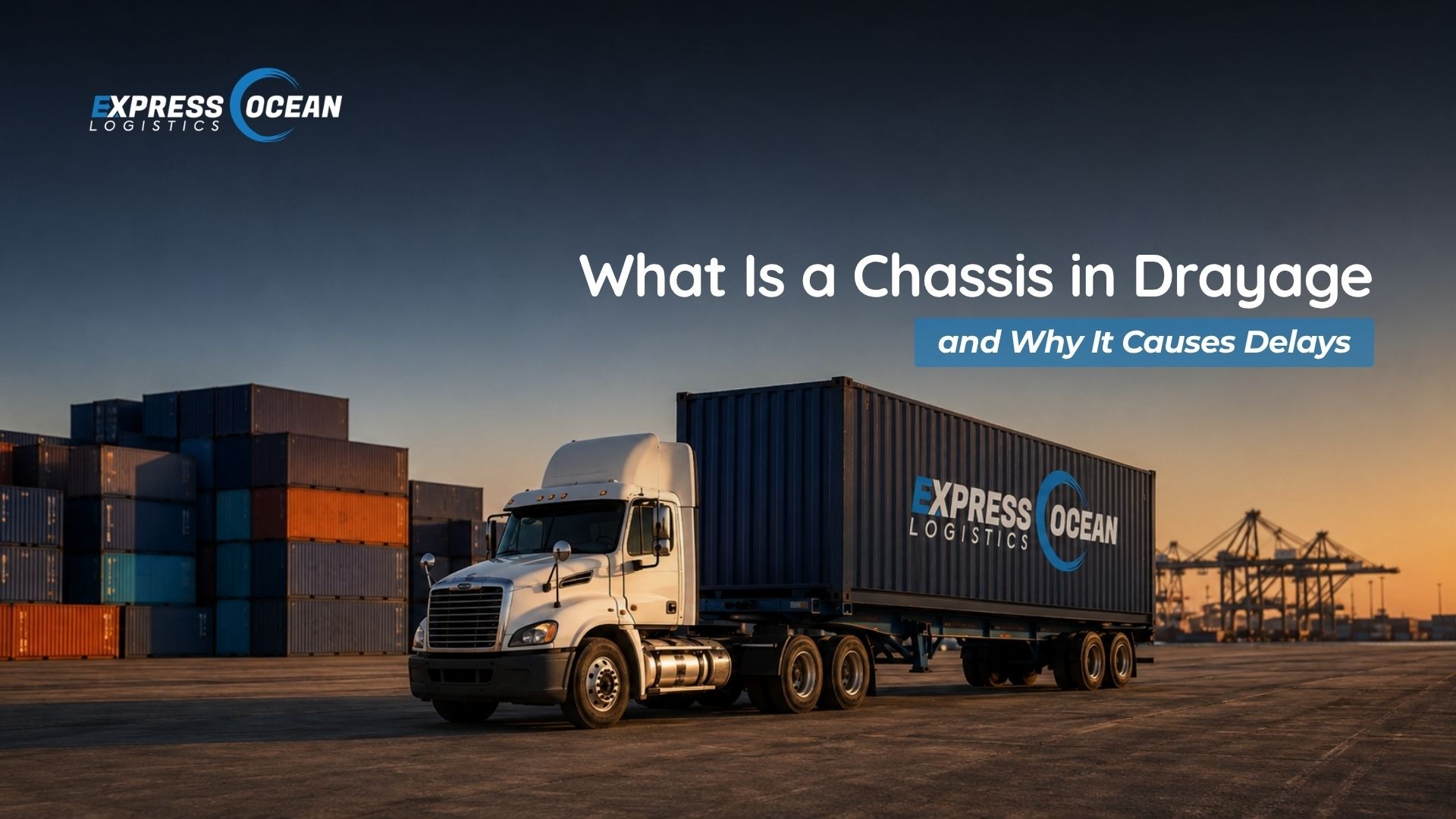
A chassis in drayage is a wheeled steel trailer frame that an ocean container sits on so a truck can move it by road. Containers have no wheels, so they need a chassis to travel from the port to a warehouse or rail yard. Chassis cause delays when the right one is not available where and when it is needed, whether through a shortage, a chassis split, the wrong type, or a roadability failure. Because a container cannot move without a roadworthy chassis, these issues stall the shipment and can trigger demurrage and detention charges.
If you import goods by sea, you have probably had a shipment held up and been told the reason was a chassis problem. It is one of the most common causes of delay in US container logistics, and one of the least understood by people outside the trucking side of the business. The container is at the port, the goods are cleared, the truck is ready, and yet nothing moves, all because a piece of equipment most shippers never see is not where it needs to be.
This guide explains what a chassis actually is, how it fits into the drayage move, the different types, who supplies them in the US, and the specific reasons chassis so often cause delays. Understanding it helps you ask better questions, plan realistic timelines, and choose a provider who keeps the equipment side under control. It is written from over 20 years of moving containers inland at Express Ocean Logistics.
What a Chassis Is and How It Works
A chassis is a wheeled steel trailer frame designed to carry an ocean shipping container over the road. An ocean container is essentially a large steel box with no wheels, no axles, no brakes, and no lights, which means it cannot legally or physically travel on a highway by itself. The chassis provides all of that. When a truck needs to move a container, the container is lifted onto a chassis, secured by twist-locks, and the truck's tractor unit then connects to the chassis and hauls the whole assembly to its destination.
In a typical import move, this is what makes drayage possible. The three pieces work together like this.
The steel box holding your cargo. It is lifted off the ship and stored at the terminal until it is collected. It has no means of moving on its own.
The wheeled trailer frame the container is mounted on. It supplies the axles, tires, brakes, and lights that make the container road-legal.
The truck that provides the power. It couples to the chassis and hauls the container to the warehouse, rail yard, or final destination.
All three have to come together at the same place and time for a container to leave the port. The tractor and driver are usually the easy part. The chassis is the piece that most often is not ready, and that is where drayage delays begin.
Types of Chassis and Why the Right One Matters
Chassis are not one-size-fits-all. Different container sizes and weights require different chassis, and using the wrong type means the container either will not fit or cannot be moved legally. These are the main types you will encounter in US drayage.
| Chassis type | Used for | Notes |
|---|---|---|
| 20 ft chassis | A single 20 foot container | Sized for short containers; cannot carry a 40 foot box |
| 40 ft chassis | Standard 40 foot containers | The most common chassis in circulation |
| Gooseneck chassis | 40 and 45 foot high-cube containers | A dropped front tunnel lets tall containers sit lower and stay within height limits |
| Combo / slider chassis | Multiple sizes on one chassis | Adjusts or extends to carry 20, 40, or 45 foot containers |
| Tri-axle chassis | Heavy loads near weight limits | An extra axle spreads the weight to stay within road axle limits |
The tri-axle is worth understanding, because heavy FCL loads often need it. Road rules limit how much weight each axle can carry, so a very heavy container may exceed the legal limit on a standard two-axle chassis. A tri-axle spreads the load across an extra axle to keep the move legal. If a heavy container is booked without arranging the correct chassis, the driver can arrive only to find the equipment cannot legally carry the load, and the move stalls until the right chassis is found.
Who Provides the Chassis in US Drayage
This is where the US system differs from much of the world, and where a lot of the delay risk originates. In many countries, the trucker owns the chassis and it is simply part of the truck. In the US, chassis are usually separate equipment supplied by specialized leasing companies.
These companies are called Intermodal Equipment Providers. They own large fleets of chassis and make them available through chassis pools at ports and rail yards, where truckers pick up and drop off chassis as they need them. Who arranges the chassis for a given shipment depends on the haulage model.
- Carrier haulage: The ocean carrier arranges the inland move and the chassis as part of its service, and the chassis provision is bundled into the carrier's arrangement.
- Merchant haulage: The cargo owner arranges the drayage themselves, usually through a freight forwarder or drayage provider, who manages access to the chassis pools and selects the right equipment.
- Chassis pools: Whichever model applies, the physical chassis usually comes from a pool operated by an equipment provider, and pool availability at that specific location decides whether a chassis is ready.
Why Chassis Cause Delays
A container cannot move without an available, correct, roadworthy chassis in the right place. That single dependency is behind most chassis delays, and it shows up in a handful of recurring ways.
During peak season or a demand surge, the pool at a port can simply run out of available chassis. The container is ready and the truck is booked, but there is no chassis to put it on, so the move waits until equipment frees up.
A chassis split happens when the container is at one location and the available chassis is at another. The driver has to make an extra trip to collect a chassis before picking up the container, adding time and mileage to what should be a single move. This is one of the most common hidden delays in US drayage.
If a heavy container needs a tri-axle or a high-cube needs a gooseneck and only a standard chassis is available, the move cannot proceed legally or safely. Matching the chassis to the container ahead of time avoids arriving to find the equipment cannot carry the load.
A chassis with a flat tire, worn brakes, or a broken light fails inspection and is placed out of service. Since the driver cannot legally take an unsafe chassis, the container waits while a roadworthy replacement is located within the pool.
Chassis can pile up in the wrong locations while being scarce elsewhere, an imbalance made worse when chassis sit under loaded containers for days, known as street dwell. Both keep usable equipment out of the pool where it is needed.
How Chassis Delays Turn Into Demurrage and Detention
Chassis delays rarely stay contained. They tend to trigger the two charges importers most want to avoid, because the clock on those charges does not stop just because a chassis is unavailable.
Demurrage accrues when a loaded container sits at the terminal beyond its allotted free time. If there is no chassis to move the container out, it stays at the port and demurrage builds up, even though the delay was an equipment issue rather than anything the importer did. Detention, sometimes called per diem, accrues when equipment is held too long outside the terminal. A chassis kept under a container that has not been unloaded can run up detention charges by the day.
This connection is exactly why chassis management sits at the center of good drayage. The move from the port to the door, which is the essence of port drayage, only runs smoothly when the equipment is planned as carefully as the truck and the appointment. A provider who ignores the chassis side leaves the importer exposed to charges that were avoidable.
How to Avoid Chassis Delays
You cannot control every chassis pool, but the right planning and the right provider remove most of the avoidable delays. These are the practical steps that make the difference.
- Confirm the chassis type in advance: Make sure the drayage provider knows the container size and weight so the correct chassis, including a tri-axle or gooseneck when needed, is arranged before the driver is dispatched.
- Use a provider with strong pool access: A drayage operator with established relationships across the chassis pools at your port has more options when equipment is tight, reducing the risk of a shortage stopping your move.
- Plan for peak season: Chassis get scarce when volumes surge. Booking the drayage early and building a buffer into the timeline protects against seasonal equipment shortages.
- Return equipment promptly: Unloading quickly and returning the chassis and container inside the free time keeps detention off your invoice and puts equipment back into the pool for the next move.
- Work with a forwarder who controls the whole move: When the same team manages the ocean freight, the customs clearance, and the drayage, the chassis is planned as part of the shipment rather than treated as someone else's problem at the last minute.
Coordinated Drayage from Express Ocean Logistics
Express Ocean Logistics treats the chassis as part of the shipment, not an afterthought. Our inland trucking operation plans the equipment alongside the container and the appointment, so the right chassis type is arranged before a driver is dispatched and the move is not derailed by a shortage or a split that could have been foreseen.
Because we manage the ocean freight, the customs clearance, and the inland leg as one coordinated service, the chassis planning is connected to everything else rather than handed off at the port. That is how a container clears and moves without the equipment gaps that cause demurrage and detention. Importers across the country rely on us as a freight forwarder in New Jersey, close to the Port of New York and New Jersey, precisely because the drayage runs smoothly when one team owns the whole journey.
Chassis will always be a moving part in US container logistics. The difference between a shipment that flows and one that stalls is whether someone is planning that equipment ahead of time, and that is the standard any importer should expect from a provider that handles the full move.
Frequently Asked Questions About Chassis in Drayage
These are the questions importers ask most often about chassis and drayage delays.
What is a chassis in drayage?
Why do you need a chassis for a container?
What is a chassis split?
Why do chassis cause delays in drayage?
Who provides the chassis in US drayage?
What are the different types of chassis?
Tired of Chassis Delays on Your Containers?
Express Ocean Logistics plans the equipment as part of every drayage move, so the right chassis is ready before the driver rolls. Let us handle the inland leg for you.
Explore Our Drayage Services