
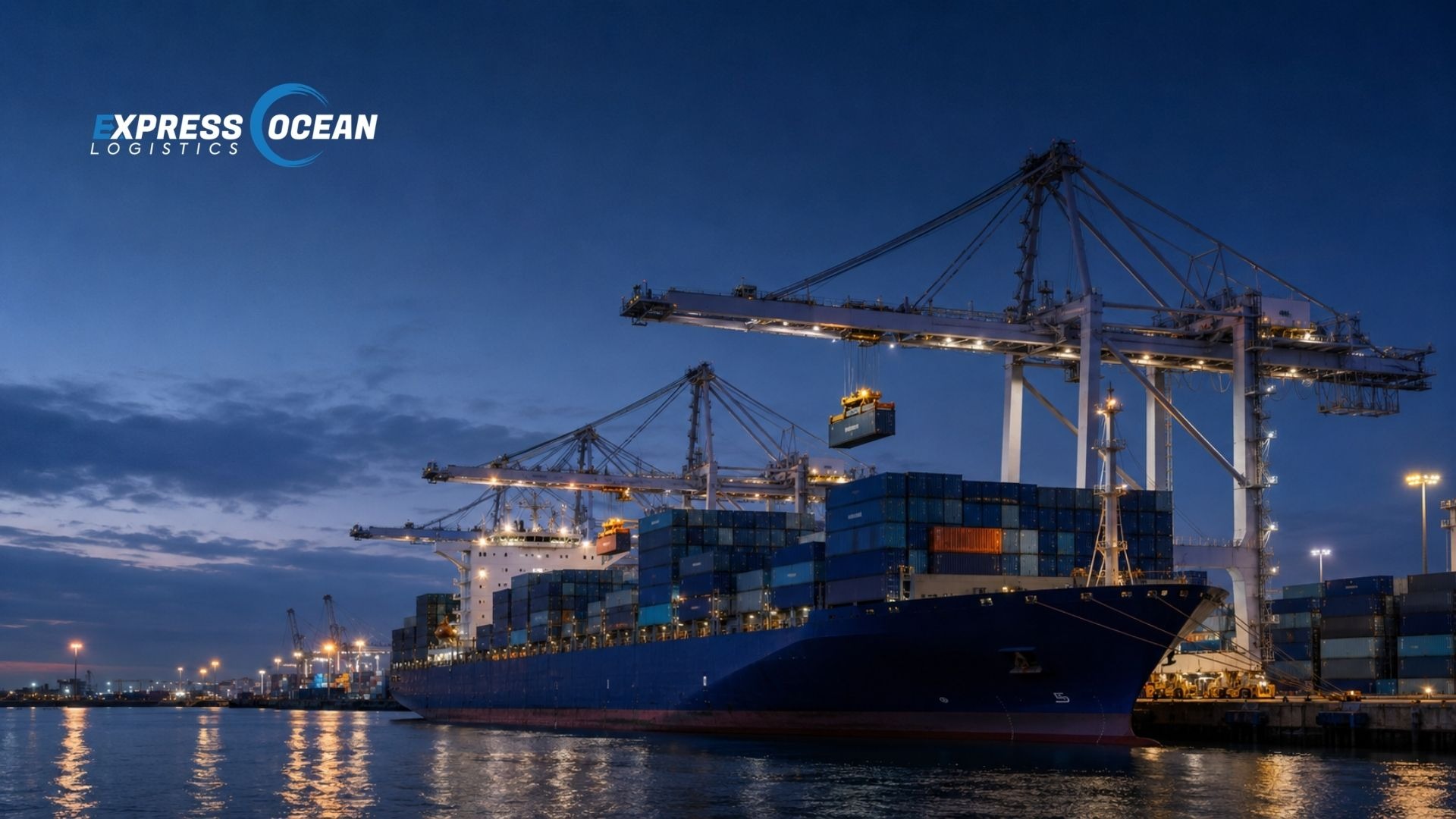
Ocean freight services in the USA cover the transport of cargo by sea and everything around it: booking vessel space, preparing documentation, arranging customs clearance, and managing the inland moves at each end. A full-service provider handles FCL and LCL, imports and exports, and drayage from the port, acting as one coordinator for the whole shipment. When choosing a provider, prioritize a valid FMC license, in-house customs brokerage, direct carrier contracts, real-time tracking, and end-to-end ownership over the lowest quoted rate.
If you are importing or exporting goods by sea, the provider you choose to handle your ocean freight shapes almost everything about how the shipment goes. Yet the market is confusing. Some companies call themselves freight forwarders, others NVOCCs, others simply ocean freight companies, and their quotes cover wildly different scopes. This guide is a practical buyer's walkthrough of what ocean freight services actually include, how the options differ, and how to choose a provider in the USA that fits your cargo and your business.
It is written to answer the questions a buyer actually has, from what these services cover to what separates a genuine end-to-end partner from a company that simply resells space. It draws on over 20 years of moving cargo for US importers and exporters at Express Ocean Logistics.
What Ocean Freight Services Actually Include
Ocean freight services are more than moving a container across the water. A full-service provider manages the entire chain around the sea leg, turning a fragmented set of carriers, ports, brokers, and truckers into one coordinated shipment. The core services usually include the following.
Securing container space with ocean carriers on the right trade lane and sailing schedule for your shipment.
Preparing and managing the Bill of Lading, commercial invoice, packing list, and export or import filings.
Filing the customs entry for imports or the export declaration for outbound cargo, ideally with in-house brokerage.
Moving the container between the port and your facility, coordinated to stay inside the terminal free time.
The distinction that matters most is whether a provider genuinely owns these services or simply passes each one to a third party. A provider that books the ocean leg, files customs in-house, and controls the inland move is accountable for the whole journey. One that subcontracts each stage adds a handoff at every step, which is exactly where delays begin. This is most visible on complex full container moves, where the freight, the customs entry, and the drayage all have to line up, which is why so many businesses build their logistics around a dependable FCL ocean freight provider.
FCL vs LCL: Which Service Fits Your Cargo
The first choice most buyers face is between FCL and LCL. The right one depends on your volume, your budget, and how much handling risk you can accept.
| Factor | FCL (Full Container Load) | LCL (Less than Container Load) |
|---|---|---|
| Best for | Larger shipments, roughly 15 cubic meters or more | Smaller shipments that do not fill a container |
| Container | Exclusive use of a full container | Cargo shared with other shippers |
| Transit | Faster, no consolidation step | Slower, adds consolidation and deconsolidation |
| Handling risk | Lower, sealed at origin and opened at destination | Higher, cargo handled during consolidation |
| Customs | Whole container clears as one shipment | Clears alongside other shippers' cargo |
For most established importers and exporters, FCL is the standard once volume justifies a full container, because it is faster, lower risk, and simpler to clear. LCL has its place for smaller or occasional shipments, but the trade-off is more handling and a longer door-to-door timeline. A good provider will tell you honestly which mode fits your shipment rather than defaulting to whichever suits them.
Understanding Provider Types: Forwarder, NVOCC, or Both
The companies offering ocean freight services describe themselves in different ways, and understanding the labels helps you read what a company actually does.
A freight forwarder arranges transport on your behalf but does not issue its own Bill of Lading or take carrier responsibility. An NVOCC, or Non-Vessel Operating Common Carrier, acts as a carrier to you, issues its own House Bill of Lading, and holds service contracts directly with the ocean lines without owning vessels. Many US providers, including Express Ocean Logistics, are licensed as both, which lets them forward your cargo and act as the carrier of record. That dual capability usually means better space access and more control over your shipment.
Cargo Types Ocean Freight Services Handle
Not all cargo is the same, and a capable provider matches the equipment, routing, and compliance to what you are shipping. The main categories are worth knowing when you evaluate whether a provider can handle your goods.
- Standard dry cargo: General goods shipped in standard containers, the most common category, moved as FCL or LCL.
- Refrigerated (reefer) cargo: Temperature-controlled goods such as food and perishables, shipped in reefer containers with monitored temperature settings.
- Oversized and project cargo: Machinery and outsized loads that need special equipment such as flat racks or open tops, plus careful routing.
- Hazardous and dangerous goods: Regulated cargo requiring IMDG documentation, correct classification, and specialized handling at every stage.
When you evaluate a provider, ask specifically about the cargo type you ship. A company that regularly handles reefer or dangerous goods will have the equipment relationships and the compliance experience that a generalist may not, and that experience is what keeps specialized shipments moving cleanly.
What to Look For in a US Ocean Freight Provider
Once you understand the services and the provider types, choosing well comes down to a clear set of criteria. These are the factors that actually determine whether your shipments run smoothly.
Any legitimate US ocean freight provider should be licensed by the Federal Maritime Commission. This is verifiable in minutes on the FMC website, and a provider operating without one is a risk you should not take.
A provider that clears customs in-house coordinates the freight and the entry as one process, which prevents the handoff gap where most clearance delays happen. It is one of the clearest signals of a genuine end-to-end operation.
Direct contracts mean more reliable space, especially in peak season. Ask which carriers and trade lanes the provider holds contracts on, and whether they cover the routes you ship.
You should be able to see where your cargo is without making a phone call, and reach a named contact quickly when something needs attention. Responsiveness during quoting is a good preview of service after you sign.
The strongest providers manage the whole journey from origin pickup to final delivery, which removes the coordination gaps that cause delays and gives you one accountable party for the entire shipment.
Ocean Freight Services for Both Imports and Exports
A strong US ocean freight provider handles both directions, and using one provider for both is usually the smarter choice. For inbound cargo, they manage the US import clearance, the drayage, and the final delivery. For outbound cargo, they handle the carrier booking, the export filing, and the coordination with the destination.
The value of a single provider is consistency. One relationship, one set of documentation standards, and one accountable team across both directions. This matters most for businesses that both import components and export finished goods, where a provider that understands the full picture removes friction on both sides. If your business ships outbound, the mechanics of a full container export are worth understanding, and the steps involved in moving an FCL export from booking through documentation to sailing show exactly where a capable provider earns its place. The same is true on specific trade lanes, where a provider experienced in a route like FCL shipping from the USA to India brings routing and destination knowledge a generalist lacks.
Ocean Freight Services from Express Ocean Logistics
Express Ocean Logistics provides ocean freight services for US importers and exporters as one coordinated operation. As an FMC-licensed freight forwarder and NVOCC, we book carrier space on direct contracts, clear customs in-house, and manage the inland delivery ourselves, so a shipment moves under a single accountable team from origin to destination rather than being passed between subcontractors.
Our base minutes from the Port of New York and New Jersey, one of the busiest gateways in the country, gives us fast origin handling and frequent sailing options across the major trade lanes. Importers and exporters across the country work with us as a freight forwarder in New Jersey because the ocean freight, the customs, the tracking, and the delivery all sit with one team that owns the outcome.
Whether you are moving a full container inbound from Asia or exporting to Europe, the Middle East, or beyond, the aim is the same: a service where the complexity is handled for you and the shipment simply arrives on time. That is what ocean freight services should deliver, and it is the standard any US importer or exporter should expect from a provider worth hiring.
Frequently Asked Questions About Ocean Freight Services
These are the questions US importers and exporters ask most often when choosing ocean freight services.
What are ocean freight services?
What is the difference between FCL and LCL ocean freight services?
What should I look for in an ocean freight services provider in the USA?
Do ocean freight services include customs clearance?
What types of cargo can ocean freight services handle?
Can one ocean freight provider handle both imports and exports?
Comparing Ocean Freight Services in the USA?
Express Ocean Logistics brings FMC licensing, in-house customs, direct carrier contracts, and real-time tracking to every shipment, inbound or outbound. Tell us what you are moving.
Explore Our Ocean Freight Services