
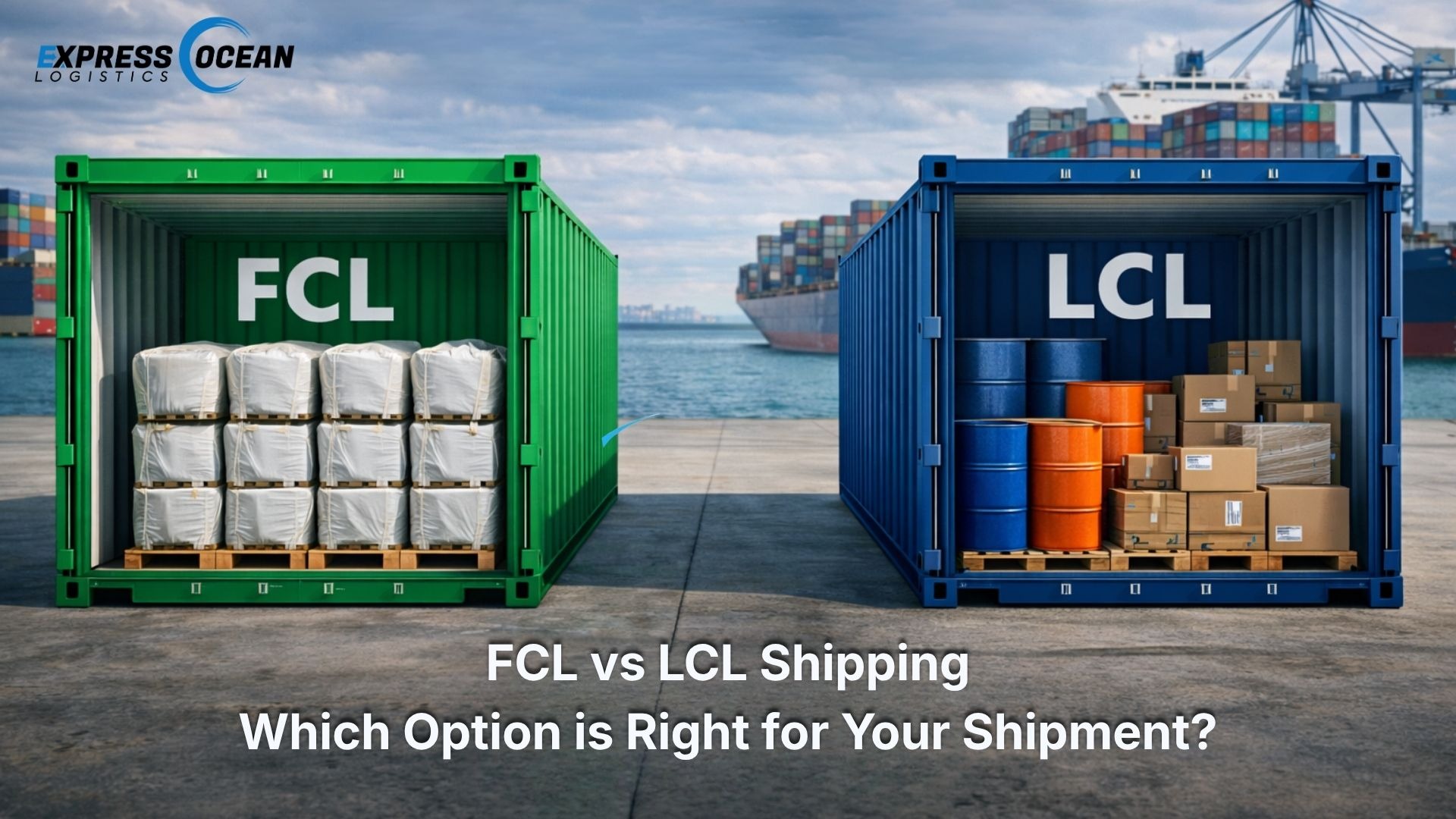
FCL (Full Container Load) gives you exclusive use of a shipping container, providing faster transit and greater cargo security. LCL (Less-than-Container Load) combines multiple shippers' freight into one container, allowing you to pay only for the space used and making it suitable for smaller, irregular shipments. Choose FCL when your cargo volume is sufficient to fill or nearly fill a container and speed or security is a priority; opt for LCL when volumes are low, you need flexibility or you want to save on upfront costs.
When planning an international shipment, one of the first decisions you'll face is whether to book a full container or share space with other shippers. The choice between Full Container Load (FCL) and Less-than-Container Load (LCL) is more than just a question of cargo volume—it influences your costs, transit times, risk exposure and overall logistics strategy. In this guide, we break down the key differences between FCL and LCL and provide practical tips to help you select the best option for your business.
What is FCL shipping and when does it make sense?
Full Container Load (FCL) means a single shipper books and fills (or partially fills) a container for exclusive use. Even if the container isn't filled to capacity, no other cargo is consolidated within it. FCL is often chosen for:
- High-volume shipments: Typically 15+ cubic metres (about 2–3 pallets) of cargo where paying for an entire container makes financial sense.
- Sensitive or high-value goods: Pharmaceutical products, electronics and other items requiring limited handling benefit from being sealed from origin to destination.
- Time-critical deliveries: Fewer stops and no consolidation delays mean faster transit compared to LCL.
Because FCL rates are fixed per container rather than per cubic metre, the cost per unit decreases as you approach full capacity. For businesses with predictable volumes or seasonal spikes, FCL can deliver economies of scale and improved reliability.
What is LCL shipping and when should you use it?
Less-than-Container Load (LCL) shipping allows multiple shippers to share space in a single container, each paying only for the cargo volume they occupy. This model involves consolidation at the origin and deconsolidation at the destination, making it ideal for:
- Smaller or irregular shipments: Businesses shipping less than 15 cubic metres or just a few pallets can avoid paying for unused container space.
- Flexible deliveries: LCL enables frequent shipments and multi-destination distribution without waiting to fill a whole container.
- Cost-sensitive cargo: Paying only for the used space can offer cost control for low-volume shippers, although per-unit costs may be higher than FCL due to handling fees.
Remember that LCL requires additional handling during consolidation and deconsolidation, which can introduce delays and increase risk of damage. However, for small businesses or startups scaling gradually, LCL offers a pragmatic entry into ocean freight without committing to a full container.
FCL vs LCL: key differences at a glance
| Factor | FCL | LCL |
|---|---|---|
| Container usage | Exclusive use by one shipper | Shared with multiple shippers |
| Cost model | Fixed rate per container | Pay by volume (cubic metres) and handling fees |
| Transit time | Faster; direct routing with fewer touchpoints | Slower; subject to consolidation/deconsolidation delays |
| Security | High; container is sealed from origin to destination | Moderate; multiple handling points increase risk |
| Flexibility | Limited to one destination; best for consistent volumes | High; ideal for multi-destination shipments and agile inventory |
How to choose the right option: FCL or LCL?
There's no universal answer—your choice depends on your shipment size, budget, time frame and risk tolerance. Follow these steps to make an informed decision:
- Measure your cargo volume
If your goods exceed roughly 15–20 cubic metres, FCL is usually more cost-effective. Smaller volumes may favour LCL, where you pay only for the space you use.
- Analyse total costs
Compare the flat container rate against per-cubic-metre LCL pricing, including consolidation fees. Factor in potential cost savings from reduced damage risk or faster transit with FCL.
- Consider timing
If you need fast delivery or you're shipping perishable or high-value goods, FCL's direct routing will likely be worthwhile. For flexible schedules or inventory replenishment, LCL works well.
- Assess risk tolerance
High-value or delicate cargo benefits from the sealed environment of FCL. If your goods can handle some extra handling, LCL can still be a viable choice.
- Factor in destination complexity
Multi-destination shipments or varied order sizes may require LCL's flexibility.
If you're unsure which path is right for you, consult a trusted freight forwarder who understands both options and can tailor the solution to your business needs.
How Express Ocean Logistics can help
At Express Ocean Logistics, we specialise in door-to-door FCL and LCL services from Asia to the United States. Our experts handle everything from sourcing space and negotiating rates to customs clearance and final delivery. Here's how we support your supply chain:
- Dedicated planning and route optimisation: We identify the best carriers and routes to meet your timeline and budget.
- Transparent pricing: We break down FCL vs LCL costs so you always know what you're paying for.
- Real-time tracking: Stay updated on your cargo's location and status from origin to destination.
- Comprehensive support: From packaging advice to customs documentation, our team guides you every step of the way.
Whether you're shipping full containers of consumer goods or smaller batches of samples, our goal is to make ocean freight as simple and predictable as possible.
Frequently asked questions
Is FCL cheaper than LCL?
How do FCL and LCL transit times compare?
Is FCL safer than LCL?
What volume qualifies for FCL shipping?
Can I switch from LCL to FCL as my business grows?
Do I need marine insurance for LCL shipments?
Start shipping smarter today
Whether you choose FCL or LCL, contact Express Ocean Logistics for a personalized quote and expert guidance. Our team will help you evaluate your shipment size, timing and budget, so you can take the stress out of ocean freight.
Get a Free Quote Today